The Robotics Revolution:
The Robotics Revolution
Navigating the intersection of AI and the future of the industry
Rishabh Agarwal, CEO & Co-Founder at Peer Robotics, recently joined Builder Nation’s Podcast host Elisa Muñoz to share his experiences as a leader in the robotics industry and the insights he has gained as a robotic engineer.
This interview was brought to you by BuilderNation, the community of hardware leaders developing world-changing products, and sponsored by ControlHub, the purchasing software for hardware companies.
The robotics industry has been making significant strides for years, with the potential to revolutionize the way we live and work. From manufacturing to healthcare, robots are being developed to take on repetitive, dangerous, or complex tasks that are difficult for humans to handle.
Autonomous robots are being created for various fields, including agriculture, transportation, and logistics, while drones are being used for mapping and package delivery. The industry has been increasing and is expected to continue expanding in the coming years.
That’s why it’s crucial to have companies that aim to innovate and democratize automation, making it more accessible and affordable for small and medium-sized businesses. This blog post will explore the robotics industry, its current state in the market, and its future.
The role of AI and machine learning in robotics
One of the emerging technologies in the robotics industry is using sensors, artificial intelligence (AI), and machine learning to enable robots to perceive and interact with the world around them. These technologies can enable robots to perform more complex and delicate tasks, such as object recognition and manipulation.
Robots can be trained in manufacturing to recognize product defects and adjust their processes accordingly. In healthcare, they can assist with surgeries or care for patients with limited mobility. In logistics, they can optimize supply chain operations and reduce delivery times.
Additionally, in the construction industry, robots perform dangerous or difficult tasks for human workers to complete. These robots can operate heavy machinery, lay bricks, and perform other construction tasks more accurately and efficiently. These advanced machines can be programmed to perform various tasks, including collecting data and samples, conducting repairs, and constructing structures.
Collaborative robots
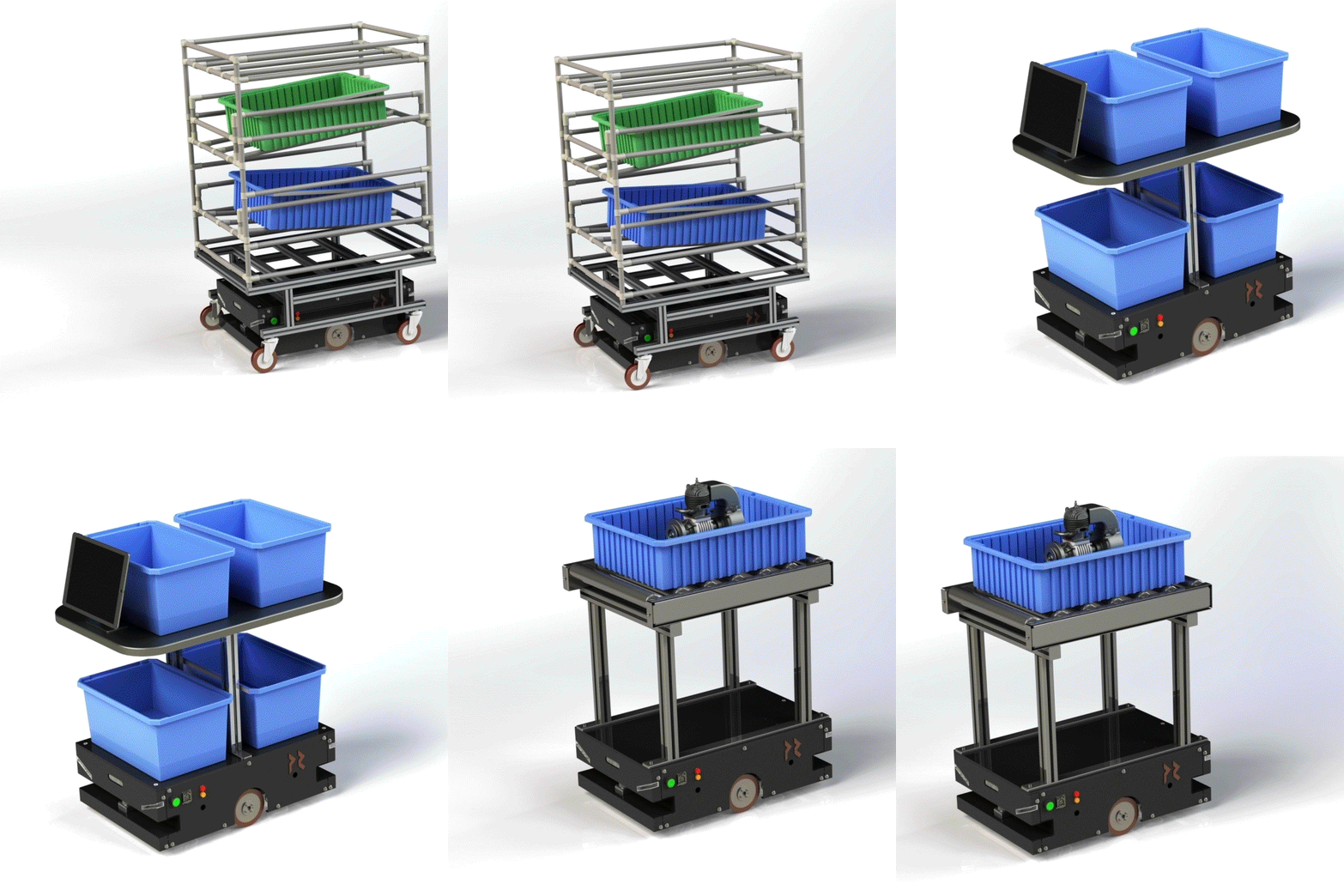
Peer Robotics is devoted to making advanced robotic automation solutions that enable manufacturers of all sizes to deploy robots — even those with no prior experience with it. Our flagship product is our collaborative autonomous mobile robot (AMR), which can be used for material handling across an array of manufacturing sectors. This robot is powered by our Person2Peer technology, which allows robots to learn from humans in real time. It allows people on the shop floor to task and retask our robots for solutions without the need for any external consultant or robotics expert, making it an affordable and sustainable solution even for small and medium-scale enterprises. Plus, our collaborative AMRs work safely alongside humans and require zero safety infrastructure investment, making them truly collaborative.
Mobile robots are designed to supply scalable solutions at no upfront cost and in no time, enabling users to increase their productivity by up to 50%, providing more output from the same infrastructure and existing workforce. The plug-and-play design allows solutions that fit users’ needs and integrates with their physical and IT infrastructure, making automation accessible for all. Additionally, since they are so easy to install, even for first-time robot users, they can even be reprogrammed for various solutions as a manufacturer’s requirements evolve.
Mobile robots help minimize non-value-added tasks in material handling, along with a range of lean manufacturing solutions designed to streamline operations and boost efficiency in the manufacturing industry. The Water Spider and Kanban Replenishment system ensures that workstations receive what they need when needed, making it easier for teams to focus on their work without worrying about delays or disruptions. The one-piece flow system enables companies to transition from long lines of trolleys to more efficient, one-piece movement, saving time and increasing productivity. Manufacturing companies can thus implement these innovative solutions to work smarter and achieve their goals efficiently, flexibly, and intelligently.
Advantages of collaborative mobile robots
Let’s learn more about the most significant benefits of our collaborative mobile robots:
- Accessible & affordable: With collaborative technologies, the massive integration and deployment cost can be down by 70%, providing scalable solutions at no upfront cost and in no time. This benefit makes it easier for businesses to adopt automation without breaking the bank. They also require zero investment in external safety features, unlike traditional industrial robots. Additionally, you can even lease them through our subscription model, in case you want to do a trial run to experience the benefits first-hand before making a permanent investment.
- Getting more from the same infrastructure: Little to no changes are required to the existing infrastructure and workforce, driving productivity by up to 50%. This benefit allows businesses to do more with what they have, ultimately increasing their bottom line.
- Flexible solution: The easy-to-deploy solutions allow users to start small and scale as needed. They can also be easily programmed for different purposes over time. This scalability is essential for growing businesses, allowing them to not only improve productivity but also enhance flexibility, which traditional automation tools do not generally enable.
- Collaborative: Our collaborative mobile robot learns from humans through our Person2Peer technology, thereby allowing front-line employees to perform no-code deployments. Additionally, with natural navigation integrated with advanced sensing technologies, this technology can autonomously move and maneuver around obstacles in close-clustered environments.
- Plug & Play: Integrating seamlessly with their physical and IT infrastructure, our robots can be deployed in just a few minutes using no-code deployment solutions. These collaborative robots have real-time learning abilities from humans, making them smart and allowing companies to automate their processes without requiring extensive programming knowledge.
Future of the industry
The robotics industry will continue to evolve and grow. The global robotics market is expected to reach $135.4 billion by 2027, growing at a CAGR of 14.5% from 2020 to 2027. One of the biggest trends in the industry is the move towards collaborative robots, or cobots, working alongside human workers in a shared physical environment. This will enable companies to achieve greater flexibility and productivity while improving working conditions for employees.
The robotics industry is at an exciting crossroads, with new technologies and applications always emerging. From manufacturing to healthcare, robots have the potential to transform the way we live and work, making our lives easier, safer, and better.
At Peer, we focus on designing robots in a way that benefits society and makes advanced technology available to all and strongly believe collaborative technology is a key driver of enabling future-proof automation solutions.