How BioWorld Automated Warehouse Operations Without Rebuilding Its Warehouse
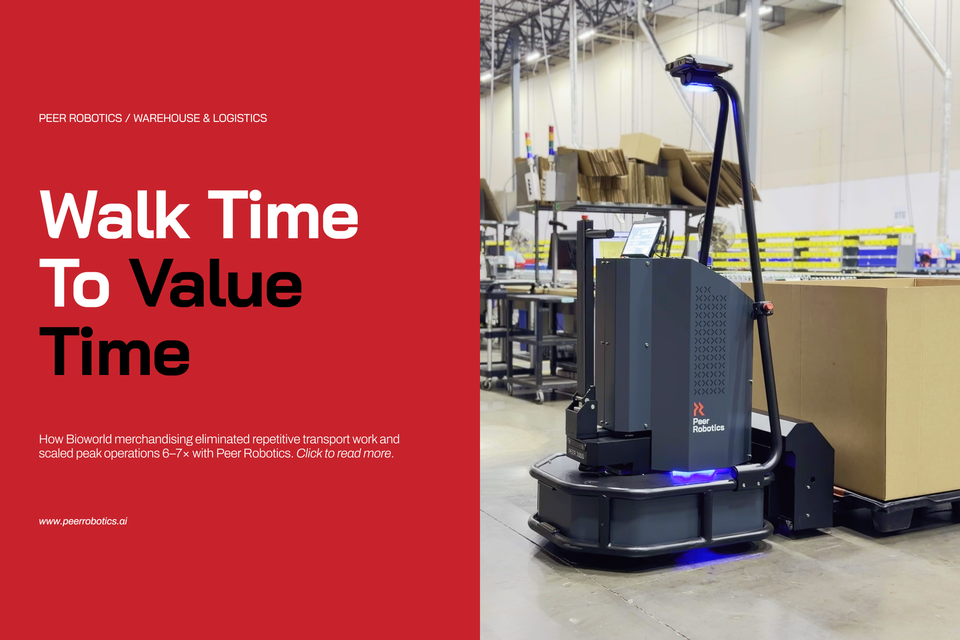
How Peer Robotics helped BioWorld reduce warehouse walk time, support 6-7x peak volume swings, and reallocate labor.
The Customer
BioWorld is one of the world’s leading manufacturers and distributors of apparel, accessories, and home goods. Founded in 1999 and headquartered in Irving, Texas, the company designs across more than 20 product categories from headwear and bags to sleepwear and drinkware partnering with some of entertainment’s most iconic brands to bring fan culture to life at every retail tier.
Behind the consumer facing product is a sophisticated warehousing and distribution operation.
BioWorld’s fulfillment facilities handle high-SKU, high-variability order processing, packing individual items and full pallets for shipment to major retailers, e-commerce channels, and direct-to-consumer orders. The facility at the center of this story is a relatively lean operation with non-peak periods shipping through multiple carriers including UPS, FedEx, DHL, and USPS.
What makes BioWorld’s operational challenge particularly acute is seasonality. Non-peak volume might mean three pallets per carrier per day. During peak season, that number can surge to 20 pallets per carrier, a 6-7x increase that’s difficult to staff for with labor alone.
The Challenge
When Walking Becomes the Work
In a warehouse where every square foot is optimized for throughput and staffing is lean by design, the hidden cost of internal material transport is enormous. Before automation, BioWorld’s warehouse associates were spending significant portions of their shifts on low-value, repetitive walking pushing trolleys between pick zones and staging areas, ferrying pallets from packing aisles to dock doors, and manually transporting goods from receiving to storage.
Over the course of an 8, 10, 12+ hour shift, that cumulative walk time compounds into real operational drag: physical fatigue that wears on workers, productive hours lost to logistics instead of value-added tasks, and a growing dependency on headcount to absorb transport volume.
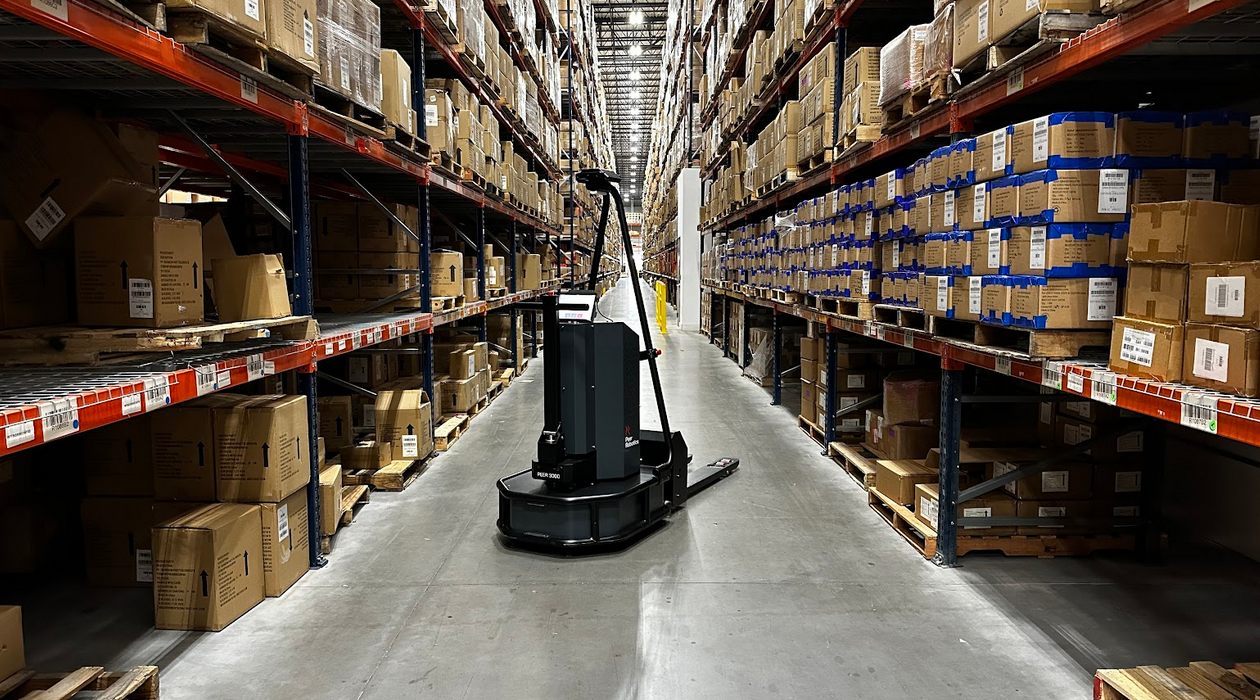
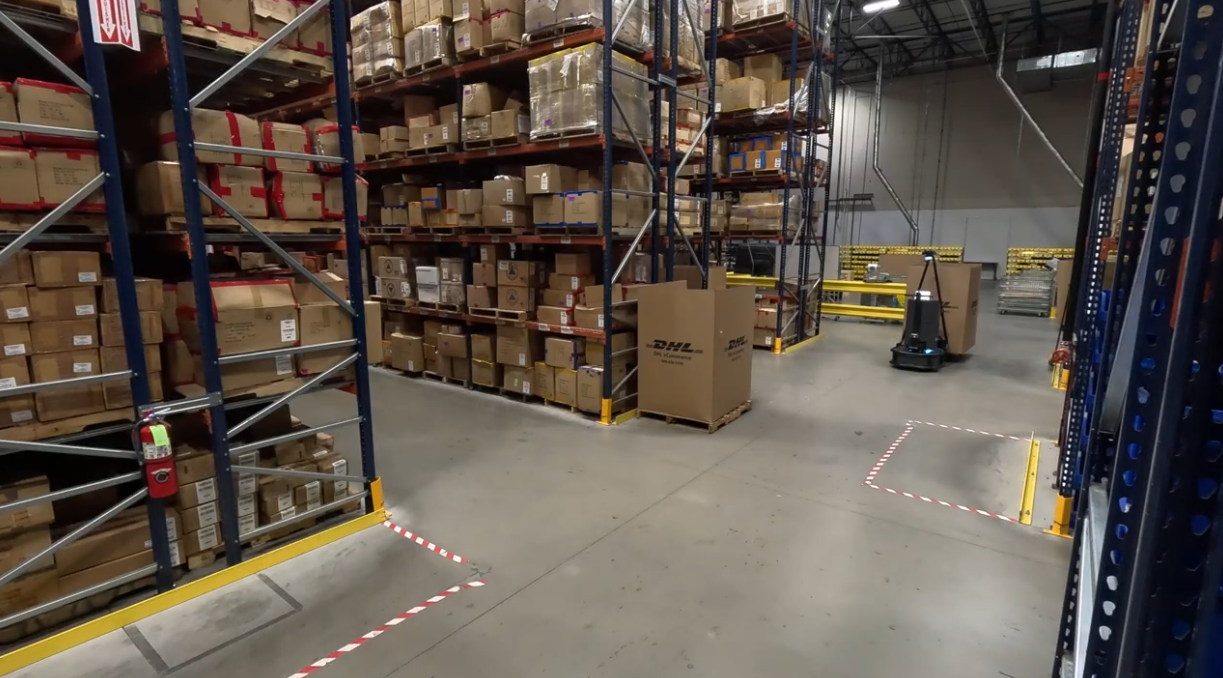
The spatial realities of the facility add further complexity. Packing aisles measure approximately 56 inches wide. Cross-aisles where loaded pallets need to make 90-degree turns are just 8 feet across. Dock plates bridging the gap to shipping trailers are 36 inches wide. And the payloads themselves are often unstable stacks taped rather than shrink-wrapped, reaching up to 7 feet tall. This is not an environment where speed can come at the expense of precision.
With seasonal peaks demanding rapid scale-up and the labor market making proportional headcount increases increasingly difficult, BioWorld needed a solution that could absorb the physical burden of internal transport without requiring the facility to be re-engineered around the technology.
“Eliminating all that walk time from our employees, letting them focus on driving more value-added processes in the building help eliminate those redundant tasks that take a toll on the picker over the course of a long eight, ten, twelve-hour day.” — Corey, BioWorld
The Automation Journey
A Phased, Iterative Approach to Warehouse Automation
BioWorld’s automation story is a deliberate, phased journey built on iteration, feedback, and trust between three partners: BioWorld’s operations team, Trilogy NextGen as systems integration partner, and Peer Robotics as the robotics platform provider.
Phase 1: Trolley Movement
The journey began with a single robot handling trolley work which is one of the most repetitive, highest-frequency transport tasks on the floor. Working closely with Trilogy NextGen and Peer Robotics, BioWorld iterated through multiple trolley configurations. They started small, moved to a larger trolley, tested additional variations, and landed on the configuration now running in production. This wasn’t a plug-and-play deployment; it was a collaborative process of fine-tuning hardware and software to match the realities of BioWorld’s operation.
Phase 2: Conveyor Integration
With the trolley workflow validated, BioWorld expanded to a conveyor-moving bot, transporting goods from pick and pack zones to conveyor locations within the facility. This extended the automation perimeter beyond simple point-to-point transport to integration with fixed infrastructure, further reducing the manual touchpoints in BioWorld’s fulfillment process.
Phase 3: Pallet Movement with Peer3000
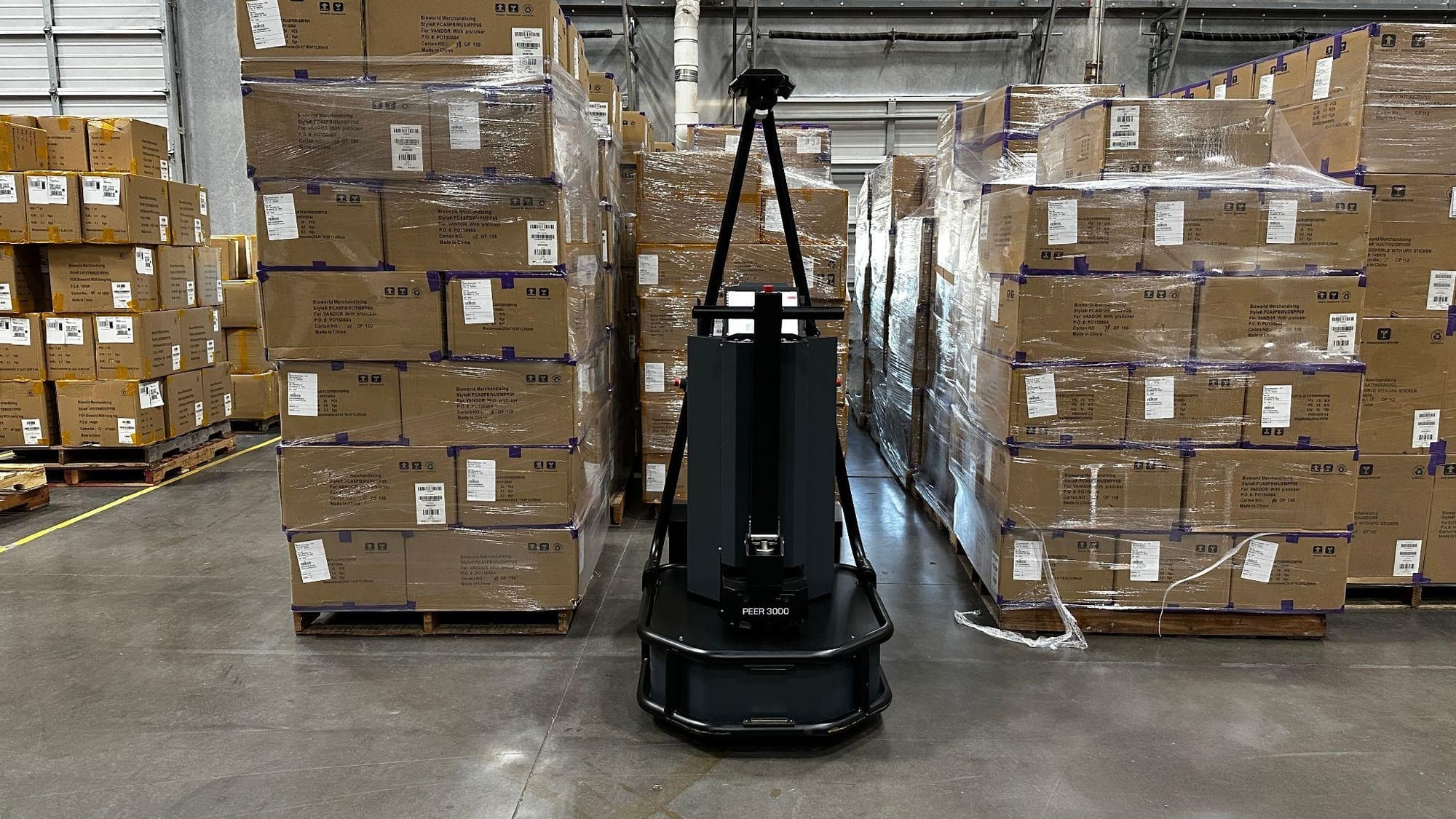
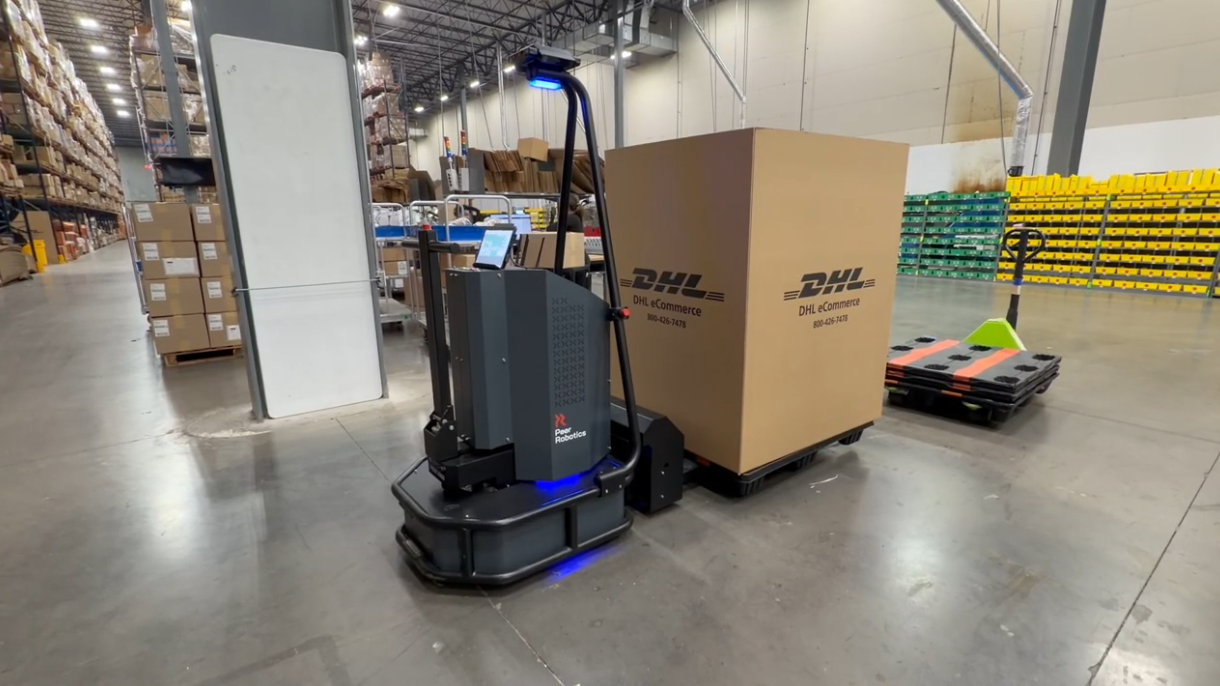
The next evolution is the most exciting yet: autonomous pallet movement powered by the Peer3000 platform. This phase addresses the heaviest, most labor-intensive transport tasks in the building such as unloading inbound trailers, and moving pallets throughout the facility between staging, storage, and dock locations.
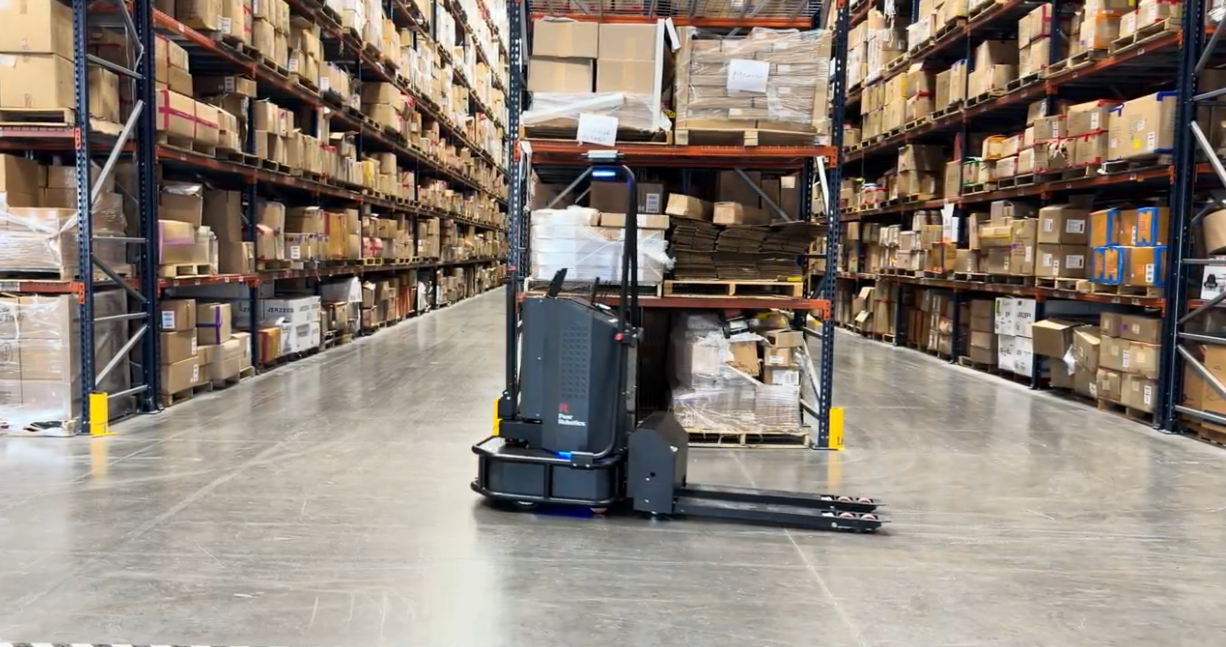
The Peer3000’s operational scope at BioWorld spans multiple critical workflows. In outbound staging-to-dock transport, pallets move from packing aisle ends to carrier-specific dock doors UPS loads to one trailer, FedEx to another, requiring the robot to navigate 56-inch aisles, execute tight turns in 8-foot cross-aisles, and traverse 36-inch dock plates into trailers, all while maintaining smooth acceleration profiles to protect unstable, taped payloads stacked up to 7 feet tall.
For inbound receiving, the robot fleet must clear 26-pallet trailer loads fast enough to prevent dock congestion, staging freight in dynamically assigned overflow aisles based on current warehouse capacity. During peak season, when outbound Gaylord container volume surges from three to twenty pallets per carrier, the system handles dynamic overflow staging autonomously finding available slots when designated staging areas fill beyond their three-spot capacity to twelve or more positions.
The Peer3000 also introduces a follow-me mode for case picking, where the robot replaces the manual push-cart entirely, autonomously following workers as they move from location to location through the aisles picking units from one slot to other acting as an intelligent, hands-free trolley.
“We started with one trolley robot. Implemented a conveyor-moving bot. And now the pallet-moving robot, whether it be unloading trucks, loading trucks, or moving pallets throughout the building, it’s just another iteration of reducing walk time for our employees.” — Corey, BioWorld
Working with Peer Robotics
A Partnership that added value
From the earliest days of the BioWorld deployment, our team and Trilogy NextGen embedded ourselves in the operation before proposing solutions. We spent time on the floor learning the facility's pain points, mapping workflows, and understanding how the team actually worked. That grounding shaped everything that followed.
The trolley design went through multiple physical iterations before we landed on a configuration that fit BioWorld's specific operation. The dashboard and mission-triggering interfaces were refined based on direct feedback from floor-level users. Route planning was adjusted to match the facility's spatial constraints and real traffic patterns. And as BioWorld's team needed to get up to speed on new capabilities, we prioritized fast, practical training to keep momentum going.
“One thing that Peer Robotics does really, really great is listening to customer feedback. Optimizing the dashboard, optimizing routes, optimizing the physical equipment.” — Corey, BioWorld
That responsiveness extended beyond hardware as the deployment matured. We continued unlocking new software capabilities, refining how missions are triggered, how the dashboard surfaces information to different user roles, and how the system integrates with BioWorld's broader operational flow. The result is an automation platform that fits the operation because it was built around it, shaped at every stage by the people running it.
“They really dig deep to try to understand our business, understand our pain points, and then provide solutions that help us improve efficiencies and reduce labor cost, and be able to reallocate that labor to other areas of the building as we continue to grow as a business.” — Corey, BioWorld
The Impact
Measurable Value in a Lean Operation
In a facility of 60 to 70 people, reducing even one to two headcount from repetitive transport tasks and reallocating those workers to value-added positions has a material impact on the bottom line. The robots run nearly around the clock aside from brief charging intervals, they’re operational 24/7, covering shifts and volume that would otherwise require additional staffing or overtime.
The impact goes beyond headcount arithmetic. By eliminating the physical grind of constant walking and pushing across long shifts, BioWorld has reduced the fatigue load on its warehouse associates, a factor that affects not just productivity but also retention and workplace satisfaction. The robots provide operational resilience against seasonal volume swings, absorbing six- to seven-fold surges in pallet volume during peak season without requiring proportional staffing increases.
And the deployment continues to generate value through the data layer. The Peer3000 platform’s operations flow capabilities and digital twin functionality give BioWorld’s operations team visibility into asset movement patterns, staging utilization, and throughput metrics that were previously invisible in a manual transport model.
“We are able to reduce one to two headcount easily in our building. We’re a relatively small operation. In non-peak, we’re probably 60 or 70 people. Reducing a couple of headcount and being able to move them to other value-added positions in the building has been a big impact for our overall bottom line.” — Corey, BioWorld
What’s Next
Scaling the Platform, Expanding the Perimeter
BioWorld’s automation journey is still unfolding. Each phase has expanded the perimeter of what’s automated from trolleys to conveyors to pallets and the Peer3000 platform is designed to scale further. With its ability to handle American, European, or custom pallets weighing up to 3,000 pounds on a single platform, and features like autonomous asset detection, dynamic zone staging, and follow-me collaboration, the Peer 3000 unlocks use cases that simply weren’t possible with earlier hardware.
For a facility like BioWorld’s where volume can spike six- to seven-fold during peak season and spatial constraints demand precision navigation, having a scalable robot fleet that adapts to existing infrastructure rather than demanding changes to it is a strategic advantage that compounds over time.
The partnership between BioWorld, Trilogy NextGen, and Peer Robotics continues to evolve, with new software capabilities, workflow optimizations, and expanded use cases on the roadmap. What began with a single trolley robot has grown into a multi-platform, multi-workflow automation system that’s reshaping how BioWorld moves product through its facility and what its people spend their time doing.
“Peer Robotics is a great partner. They’ve been very receptive, quick turnarounds on things whether it be education for us or unlocking new software opportunities. They’ve been a great partner to work with.” — Corey, BioWorld
About Peer Robotics
At Peer Robotics, we help manufacturing and warehouse customers automate their material movement for brownfield operations. Leveraging our expertise in human-robot interaction, vision systems, and embedded intelligence, we deliver intelligent, cost-effective solutions tailored for warehouse operators. The Peer3000 autonomous pallet jack deploys with zero infrastructure changes, learns from human operators in real time, enhancing productivity and paving the way for the next era of warehouse automation.
As a solutions-focused partner, we're dedicated to empowering businesses with the tools they need, not only to solve current issues, but to ensure sustainable growth and success in the ever-evolving logistics landscape.