Lean Manufacturing with Collaborative Mobile Robots
Robots are revolutionizing market competitiveness, as they are becoming increasingly feasible. In 2015, manual welding cost three times more than robotic welding, according to BCG [BCG]. Robots were a viable alternative in 2015. Despite this, their adoption has been limited due to safety concerns and expert knowledge requirements to operate them. However, the landscape of robotics solutions in the market is changing rapidly.
Accessible automation with Collaborative robots
Collaborative robot (cobots) technology is one of the burgeoning solutions. Unlike traditional robots, which require humans to keep out of their workspace, cobots are designed to work with humans. They are capable of understanding human intentions through gestures, commands, or physical interaction. The collaborative technology allows robots to assist and learn from human operators. Owing to their capabilities and high ROI, they are being widely adopted across different industries and sizes of operations. The collaborative robot market is expected to grow at a CAGR of 42% during the forecast period of 2020–2027 [source].
Changing market dynamics
Robots are not just increasing market competitiveness but changing market dynamics as well. Labour shortage, the shift towards e-commerce, demand for customization, and short product cycles, were some of the challenges already brimming before the pandemic. In 2019, the COVID pandemic and its aftermath added an extra layer of complexity, leaving many businesses scrambling to survive. The scale of its impact is apparent from the 2021 survey by Deloitte, which predicts a gap of 2.1 million jobs by 2030 in the US, costing 1 trillion dollars in 2030 alone [source]. In response, businesses are promptly adapting robots to increase their operations and incorporating lean ideologies more diligently to make their existing ones more efficient.
Lean process with collaborative mobile robots
Lean ideologies are simple and powerful, yet difficult to implement. It requires analysis and tracking of operations, designing newly improved and feasible plans, implementing them on the floor, and making sure operations run smoothly and consistently. One of the best ways to implement lean processes is to identify and minimize non-value-added work such as material handling. A case study at LEAX Skaraborg, Sweden, estimated that unnecessary manual material handling consumed 9% of their total production time [source].
Here is how collaborative mobile robots can enable lean material handling operations.
Movement Minimization
In operations, the movement of materials or humans is considered a non-value-added function. Although unavoidable, its nature is repetitive.
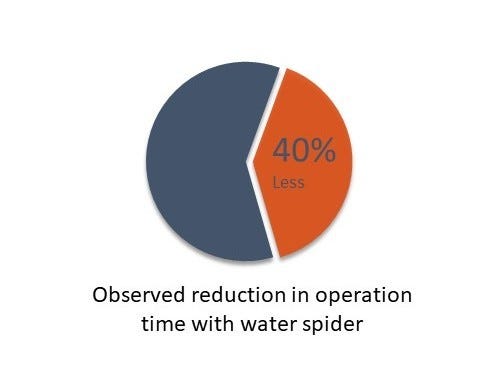
The role of water spiders (Mizusumashi) helps optimize such movements. They are responsible for keeping stations stocked, ensuring a continuous flow of productivity, and saving stocking time for other operators. The role requires them to move around the floor at fixed intervals, manually maintain an inventory database, and track station bins for material requirements. Implementation of water spider led to 40% time saving for KARL STORZ SE & Co. KG [source].
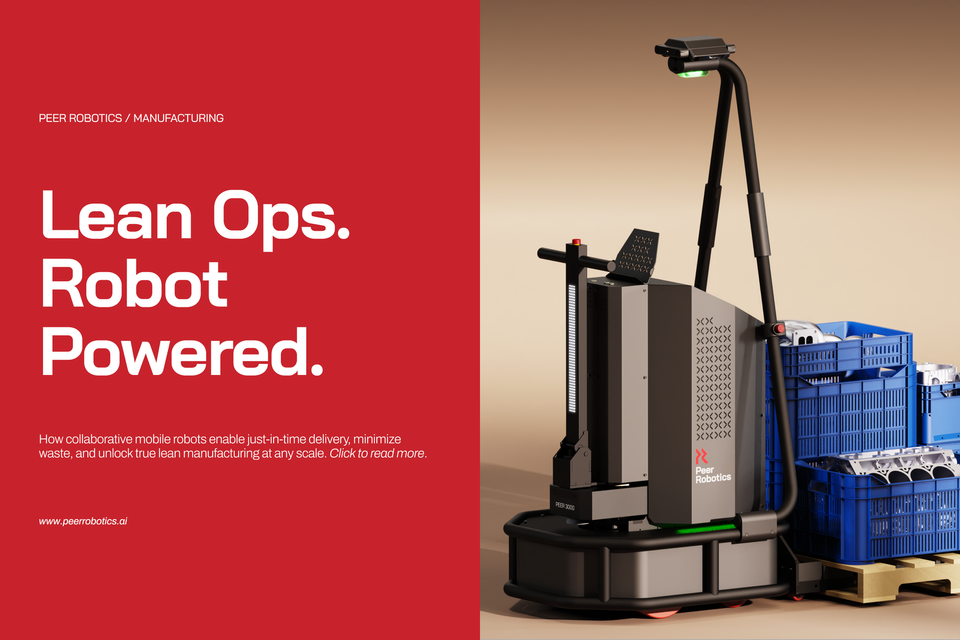
These improvements can be furthered by using mobile robots. A mobile robot will ensure on-demand delivery wherever and whenever it’s required. It will help businesses avoid uncertainties and delays due to human operators. Additionally, it will enable digital transformation via automated tracking of inventory, allowing your kanban boards to be always up to date.
Inventory Management
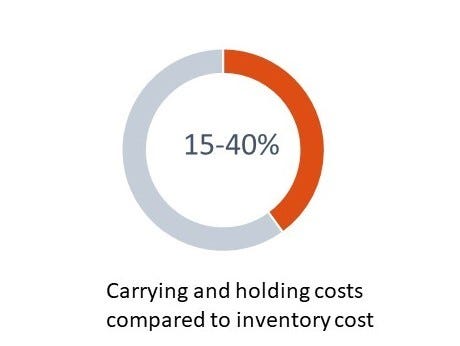
Inventory waste is not just limited to material wastage. Inbound logistics highlights that the cost of carrying and holding the inventory can be as much as 15–40% of the inventory cost itself [source]. These additional costs arise from value depreciation, taxes, storage, obsolescence, and damage.
One of the ways to optimize inventory is through continuous (one-piece) flow. It allows operators to restrict overproduction and overstocking by monitoring the rate of inventory consumption. It further helps in minimizing overhead costs by avoiding unnecessary material movements.
Mobile robots can help to ensure continuous flow by delivering parts Just-In-Time (JIT) or taking material from one work cell to another. Helping industries transition from long hauling trolley trains to JIT taxi service deliveries.
Empowering humans
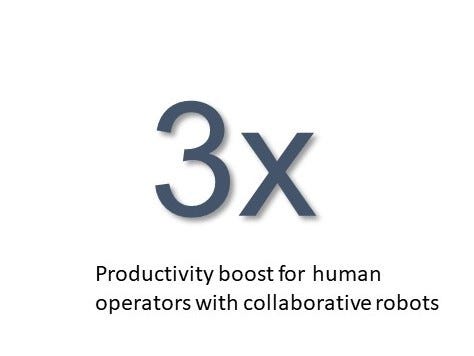
Working with collaborative robots allows users to delegate repetitive tasks to the robot and focus on other complex tasks. Collaborative robots have been shown to boost the productivity of human operators by three times [source].
In the past, dynamic operations with changing requirements were often a barrier to automation. Nevertheless, robot capabilities like learning by demonstration are changing that. Even tasks like material flow in low volume, high variety product lines can be automated using collaborative mobile robots within minutes, bringing scalability and flexibility.
Continuous improvement
Continuous improvement (Kaizen) is a common strategy in lean manufacturing and warehouse management. It allows companies to achieve regular and incremental improvements through a cycle of analysis, identification, and change. With readily available data from the robot, managers can take quick actions to optimize their processes. Additionally, collaborative technology facilitates reassignment and deployment of robots to new areas to incorporate process changes from kaizen.
In conclusion, collaborative mobile robots can lend a helping hand to industries in overcoming current market challenges. They can help enable lean operations via automated material handling. By providing opportunities to remain flexible, and scalable always. At Peer Robotics, we build accessible and out-of-box material handling solutions using our collaborative and flexible mobile robots. To learn more please visit www.peerrobotics.ai